Leadership that Lasts

gpa&jo

In a world of never-ending corporate sell-offs, sports organization shake-ups, constant political jockeying, and increasing religious in-fighting are we losing sight of the importance of Leadership that Lasts?

I’ve been reading my dad’s book, The Resilient Pastor, and came across a quote this morning that got me thinking about the staying power of leadership in our culture today. He says,

“In life and leadership, it is not so much about the beginning as the finishing. Many begin well; too few finish well.”

I’m not a pastor and I’m not reading my dad’s book just to be a good son. What I’ve found as I’ve worked through his practical ideas for pastors to put into place in their lives to weather the storms of leading a church is that if I replace the word “pastor” with “leader” throughout the book, the lessons and guidance are universally applicable. The fact of the matter is that today’s leaders – in business, in politics, in sports, AND in the church, are facing some serious challenges to their ability to LAST for long periods of leadership. While the details that create these challenges might be different, the core factors are the same:

1) Leaders are often unprepared or underprepared for the challenges of being THE LEADER.

2) Leaders often have a weak or faulty personal foundation.

3) Leaders succumb to unrealistic or false self expectations and try to take short cuts to meet them.

4) Organizations fail to support and encourage leaders through periods of challenge which limits a leaders’ willingness to take risk.

5) We, as a culture, have become enamored with brevity in our communication, our patience, and our view of change, expecting organizational change and growth to happen in that same brief cycle.

As I look at my own life, I see places where I have fallen victim to these challenges myself.

I look back on my hopes and dreams from just 10 years ago and I am thankful that I wasn’t thrust into more visible leadership roles. It is only with the gift of time that I can look back and recognize that I didn’t have the foundation that would have made me a great leader at 30. While I do believe my foundation is still being built at 40, I also know that I am much more prepared today for formal leadership than I was 10 years ago.

In much the same way, my own leadership ability has been shaped and strengthened by personal challenges. Having kids, buying and selling homes, working through marital struggles, persevering during lean financial times, and sorting through my own personal strengths and weaknesses has made me a more stable person with a stronger personal foundation. By going through those things I’ve been able to put solid bricks into that foundation.

It is the mark of a successful leader to be driven to succeed in their chosen field. What I have recognized, however, is that I can’t do it all. I was having a laugh a few weeks ago with a good friend of mine who has taken a position that I used to have. I was sharing with him some of the stupid things I used to do in that position because I thought I could, and should, do it all. Staying at the office at all hours of the night to put together a scorecard for the next game because I had sold it that way seemed like the right thing to do at the time. In my mind, I was being a good leader by making sure that our organization did what we told the sponsor we were going to do. As I think back on that now, it seems so silly. The only reason I put those unrealistic expectations on myself was because of immaturity. Thankfully, my friend is older and wiser than I was when I had the position and understands that if you’re majoring in the minor details as a leader, you’d better look at how you’re doing things because that is a recipe for burn out.

I’ve also been a victim of organizational management that created an environment of fear for its leaders. It is important for any organization – business, political, sports, religious to remember that expectations that you STATE and the actions that you TAKE have to be in sync. A few years back I was handed the reigns of a failing, dis-functional sales organization and told to rebuild it for long term success. Too often in both sports and business, the initial expectations that we lay out for our leaders quickly change to “Just win baby,” and that is what happened to us. As soon as the organization saw early positive results from the first phases of my re-building, the expectations shifted to setting sales records. The plan was derailed because the team wasn’t stable enough yet for that kind of pressure and we ultimately failed. My confidence as a leader was shattered.

Last, but not least, I’m guilty of not taking a long view. If you look back at the picture accompanying this post, it illustrates what I’m TRYING to do in my leadership life now. That picture is of my dad and my daughter standing on the top of Stone Mountain, GA a few years ago. Just like in this picture, my dad has been holding the hand of young leaders as they go through periods of fear and excitement, looking out on their possibilities for over 40 years. Before I was born, he was forming his own leadership foundation, making his mistakes, and faithfully leading where he was instead of worrying about what was next. It is my hope and prayer that I’ve reached a point in my life that I can start holding hands as well. I’m sure there will be times that I’ll have to run back to daddy for support when I get too close to the edge or have a scary stretch, but like my daughter in this picture, I’m going to keep my head up, looking at the long view of leadership and understanding that it isn’t so much about the beginning as it is the finishing.

Thanks dad for that great reminder today.

When Life is a Treadmill

treadmillphoto

I’m on record that I hate running on treadmills. I’m going to amend that to include when work “feels” like a treadmill as well.

It seems like there are just phases of life where every work day is pretty much the same as day before. Where you feel like you’re running a good pace because you’re getting tired, but not really going anywhere. No measurable victories, no significant losses, no new challenges, no change in scenery. Generally, it is like your work has been put on a treadmill.

The reason that I don’t like running on treadmills is that even though you consciously know you’re doing something, sub-consciously it feels like you’re standing still. The scenery never changes so your mind doesn’t measure the work that you’re putting in. It is mindless and boring to me. I like to see new things, experience new places, and face new challenges when I run. I desire the same things in my work – new challenges, different day to day schedules, and new clients and colleagues to engage with in meaningful dialogue.

So, when my work life starts to feel like a treadmill it feels mindless and boring to me. Over the past few weeks, I’ve been on one of those work treadmills – several big projects are rolling along without too much of my interaction required; we’ve put some great proposals on the street and it isn’t time to “push” those opportunities yet; there don’t seem to be a ton of new projects on the horizon; AND I work from home, so no one just to grab coffee with and brainstorm about new ideas. It is just plowing along, putting in effort, but sub-consciously it feels like it isn’t going anywhere. BOOORRRRRINNG!

So, what to do? I guess there are a few options:

  1. Take a vacation. I actually did take yesterday off since the kids were out of school and I’m taking next Monday off for the same reason. I hope we’ll be able to share some experiences together to get my mind off of it.
  2. Take on a new challenge. Seems like I don’t ever have to look very far to find a new project or challenge around the corner. I have a new opportunity to teach a college class again this semester and I’m finding out about new and interesting things in my world every day just by opening my eyes it seems. (Trick is to not take on too much)
  3. Feed my mind. I’ve checked out some books I’m interested in and I’m trying to catch up with some friends I haven’t talked to in awhile. Writing and reading are good distractions for me.
  4. Push on old business relationships. This is hard to do when things are busy, so I’ve reached out to some past clients just to see how they’re doing and fill them in on what we’re up to at Downstream.
  5. Consider the obvious. Am I getting the kind of “work exercise” I want and need? Is it time for a “new type of training?” I’m still grappling with this one.

What I don’t want to do is sit around wasting time surfing the internet. I don’t want to become a micro-managing part of my team just because the rest of the team is hard at work on the projects we closed at the end of the year and my “heavy lifting” is on a break right now. I don’t want to get dis-enchanted with what I do if this is just a spell.

So, even though I find treadmill running incredibly boring, I’m just going to accept today that sometimes its cold outside and if you want to work up a sweat, you just have to hope on the treadmill and run. And so it is in work as well.

A Thank you to Marriott

marriottlogo

I’ve been in jobs in Sales, Marketing, Coaching, and Administration my whole life that have required interaction on a regular basis with hotels and hotel brands. Because of this engagement, I don’t pass out compliments lightly. However, I feel like I owe Marriott a “thank you” for 2015.

I made Platinum level in the Marriott Rewards program for the first time in 2015 and that was nice, although not necessarily mind-blowing. I appreciated the upgrades and the welcome gifts, but they didn’t vastly change my experience. What did change my experience was the bonus points I received with each stay, which allowed me to amass points in 2015 at a whole new level. And having this mass of points is what I’m thanking Marriott for the most because they allowed me to…

  • Give a good friend a week’s stay in Cleveland, OH while her father was in the Cleveland Clinic having a heart procedure. It felt great to know that her and her mother didn’t have to worry about how they were going to pay for a hotel or if they were going to have a nice place to stay while they were going through this stressful time.
  • Take a trip of a lifetime with my wife for my 40th birthday. Our long weekend in Rome, Italy at the Marriott Boscolo Exedra was an experience I’ll never forget and one I wouldn’t have been able to afford without all of those points.
  • Provide a place for my mother-in-law and wife to stay in Knoxville, TN over Christmas when my father-in-law had to be rushed to the hospital on their way to visit us for the Holidays. Having points to share on these hotel rooms kept my family from having to sleep in a hospital room for over 3 weeks; while it was a difficult time, a nice place to sleep and a smiling face in the concierge lounge every morning made life bearable during this tough time for our family.

I was a committed Marriott Rewards member before this year, but the ability to make these things happen with my points not only made me feel good personally, but showed me the value in loyalty.

Any of us to travel a lot know that not every location of our favorite hotel chain is perfect. We run into problems from time to time and get frustrated. But my experience with the Marriott properties I stayed at in 2015 was fantastic and I’m particularly thankful for the Courtyard Cleveland Independence, the Boscolo Exedra Roma, and the Knoxville Marriott for making my family and friends feel welcome and cared for on our points stays. You’ve increased my loyalty for 2016 and beyond.

THANK YOU.

I DO Care, But I Still Love Him

jacklibrary

“I don’t care if my kids play sports, I just want them to be happy.”

I can’t tell you how many times I’ve heard someone say this, often some of my best friends, and almost always the parents of kids who are playing sports and loving it. This comment is usually a part of an explanation as to why they have their kids playing a sport year round at 9 years old or when they are telling me that their kids WANT to participate in 2 different leagues that require practice 4-5 nights a week. Essentially, it is always the parents whose kids ARE playing sports who say they don’t care. And always I wonder…would they say that if their kids DIDN’T play sports?

Tonight, as I was walking around the neighborhood after dark on a pretty crisp January night for North Carolina, I heard the bounce of a basketball. I followed the sound until I found one of the neighbor boys, a middle school aged kid, shooting baskets in his driveway by the light of the streetlight by himself. I was instantly taken back to my middle school days when I would shovel the neighbor’s driveway in the winter so I could shoot baskets on their garage hoop because I didn’t have one of my own. They had a light on the corner of the garage that lit up just enough of the driveway to see and I knew how to get in the garage and turn that light on (and they were patient enough to let me keep on shooting). It was where I first started to really love the game, where I first honed my skills, and where I first dreamed of playing college basketball (for Lou Henson and the Flying Illini!) Watching that boy shoot hoops in his driveway reminded me how much joy the game brought me as a youngster.

My wife and I both achieved many of our athletic goals – we were both scholarship athletes in our sports in college, we both coached at the high school and collegiate levels, and we both worked in big time college athletic departments. Sports were and remain a big part of our lives and who we are as people. To this day, I earn my living working with sports organizations at the college and pro level.

The thing is, despite our passions, abilities, and interests, our kids (ages 9 and 6) don’t play sports. Our kids aren’t even really that interested in sports. We’ve tried to make them play…not interested. It isn’t that they aren’t athletic – both are in the top 10% of height and weight for their age and both run and play around outside all the time. They just don’t play sports.

And I DO CARE! It bothers me. It makes me sad that I don’t have to call them in from the driveway for bed or tell them we have to stop playing catch because it is getting dark. It makes me sad because both Jessi and I have experienced first hand the value of team sports and are the people we are today because of our sports. But as I walked home tonight, I also realized that I LOVE THEM ANYWAY.

The picture above pretty much sums up my son, Jack. He’s happiest in a book store, sitting quietly by himself or playing in his imagination in a solo world. My daughter teaches her baby dolls all sorts of lessons and tags along with her big brother on his neighborhood exploring, which seems to be her happiest moments. And I’m learning to appreciate what makes them who they are and what makes them happy. But I’m not going to lie about how I feel about them not playing sports – I do care, but I love them anyway.

I hope that parents who say they don’t care will just stop and instead admit that they DO CARE and stop apologizing for it. It’s just what they enjoy doing right now and all you really should do is love them. Just be sensitive to what they really WANT to do and when they do want to stop playing sports, whether they verbalize it or not, let them. While they do want to play, encourage them but don’t overdo it, because when they stop you’ll realize that your really DO CARE and it may make you sad when they don’t.

A Gun Toting Response

gun&cousin

I am not against guns, or gun ownership, or the Second Amendment to the Constitution. I own two shotguns. I grew up hunting with my grandfather, uncles, and cousins. I played with, created, and loved toy guns as a youngster. And, as evidenced by the photo above, I’m fine with my son and his cousin playing with their Nerf guns. I don’t have a concealed carry permit, but by all accounts I’m a gun toting American.

And I believe it is high time that some of us gun toting citizens speak up about the NEED for stricter gun laws.

Please set aside all of the political rhetoric and partisanship. Let’s think logically for just one minute about regulating something that is DESIGNED to kill. I have shot and killed many animals in my life; I’ve held their still warm bodies in my hands and I’ve carried bloody bird carcasses in a bag in my jacket. The only way I was able to kill those living beings was with a gun. So we need to stop being so passe about things that are intended to end life!

I would suggest that there are two or three simple things that would be a good place to start:

  1. Ban the sale of all automatic weapons and large capacity magazines. No educated person can make a logical argument that a common citizen needs one of these mass killers. The only people that need these types of weapons are police officers and military personnel and I’m cool with them having whatever weapons they feel will help them protect the rest of us because it is their JOB to be trained in the proper use of guns. If you go to a bar in North Carolina today and order a high volume beer, they’re going to serve it to you in a smaller portion than a regular beer. Shouldn’t we at least consider applying the same logic to the weapons that proved in San Bernardino that they can kill 14 people in a matter of minutes?
  2. Expand the waiting period to purchase ALL guns and require mandated safety classes for all first time gun buyers. If you want to purchase a gun for a legitimate reason – hunting, sport shooting, defense of your home from intruders – you will not only be diligent enough to want to get the proper training, but you will also be patient enough to wait a few more days if it is important to you. We make first time drivers take a pretty involved training course, pass a written and field test, and then wait for the DMV to issue them their license before we allow them to get behind the wheel of something that is built and designed for SAFETY. Seems logical to me that before we hand anyone something designed to DAMAGE that we should ask them to get some training on how to use it and wait a few weeks to make sure they really want it and need it.
  3. Allow the industry to sell the guns they are designing that are designed for SAFETY. This might be the easiest one of them all…it is very clear that many manufacturers and entrepreneurs alike have working Smart Guns ready for the marketplace. However, in the name of the Second Amendment, gun lobbyist have gone to great lengths to stop the sale of these weapons that have been proven to prevent an un-authorized user of a gun from firing (thus preventing children from picking up a gun and shooting their friend or a thief from using a stolen gun to murder). I’m not sure if I even need a comparison case, but it is hard for us to imagine the auto industry preventing seat belts from being introduced to cars because they’d prefer their products kill more people when used inappropriately.

None of these steps will completely stop the mass shootings. None of these steps will keep law breakers who really want a gun from getting one either. None of these steps will end tragic stories of kids killing kids with their parent’s loaded weapons. But that should not stop us from passing laws that make us all safer around one another. Since 1968 when the first seat belt laws went into effect, motor vehicle fatalities have dropped from 26.418/100,000 people to 10.345/100,000 people. That’s a 39% DECREASE in the number of people killed in auto crashes because we passed laws to ensure they were safer.

So, please, if you’re a gun toting American like me who hasn’t allowed your opinions to be owned and operated by one of the largest lobbying groups in Washington, speak up. There is no need to take guns away from people or keep them away from people who enjoy them for sport. There is no need to go into panic mode and take all of our kids’ toy guns away either. We just need to take some simple, logical steps to HELP make the country we live in a safer place for all of us. And we need to keep talking about it until it happens.

Decisions

fork

Decisions, decisions, decisions…life is full of fun, interesting, difficult, painful, and exciting decisions.

In his book, All the Places to Go, John Ortberg cites a study that found that the average person makes about 70 conscious decisions per day. These make up the 25,550 mundane, important, and life sustaining decisions we make per year. For a person who lasts seventy years, those 1,788,500 decisions make up who they are as a person. As Albert Camus said, “Life is a sum of all your choices.”

This weekend, on a simple trail like the one above, it was illustrated for me how impactful a seemingly insignificant decision can be. Our family was walking along the Price Lake Trail along the Blue Ridge Parkway, enjoying a beautiful fall day. My 9 year old son was leading the way and we came to a fork in the trail. You couldn’t really see the end to either side, but there didn’t seem to be room for a true ‘fork’ so he said “you go that way and I’ll go this way daddy and we’ll meet up on the other side.” And that is what we did – we both walked maybe 20 yards and then the two trails came back together and we walked on. Maybe a half a mile later, we came to another fork and Jack again said, “let’s go both ways again and meet up.” Only this time the trails didn’t come back together. As soon as it went out of view, my trail veered off sharply, seemingly going somewhere else. As my son blissfully continued on the main path, it was clear to me that my path was not going to loop back around and reconnect. Because I’ve made roughly 792,149 more decisions in my life than my son, my experience told me that I’d better stop and turn around, return to the main trail, and catch up with my family before either I got lost or they got worried.

Our decisions in life are often the same. Some of them we think are going to be so impactful and we worry over them, pray over them, and over think them. Then we get a few steps into the decision and realize it brings us back to the path we were on and we move comfortably along. Other times, in a moment of comfort or on a whim, we make what seems to be an insignificant decision and move down a path that ends up taking us in a completely different direction. Sometimes we have the opportunity to backtrack to the main trail, but other times we end up just going a different direction and by the time we realize it, it has become our new path.

I’ve made a lot of decisions in my life, well over a million I’d surmise. Some of them have been good and beneficial and others have been painful and hard. But every one of them has made me who I am. As I continue forward on my life’s path, I think I’ll keep in mind that each decision, large and small, is impactful to who I am becoming. Being mindful of this won’t avoid hurt, pain, and sorrow, to be sure. Being mindful of my decisions will, however, make me more self-aware of what it is that makes me the person I am and the person I will become.

Very Important Insignificant Speck

St Peter's Basilica

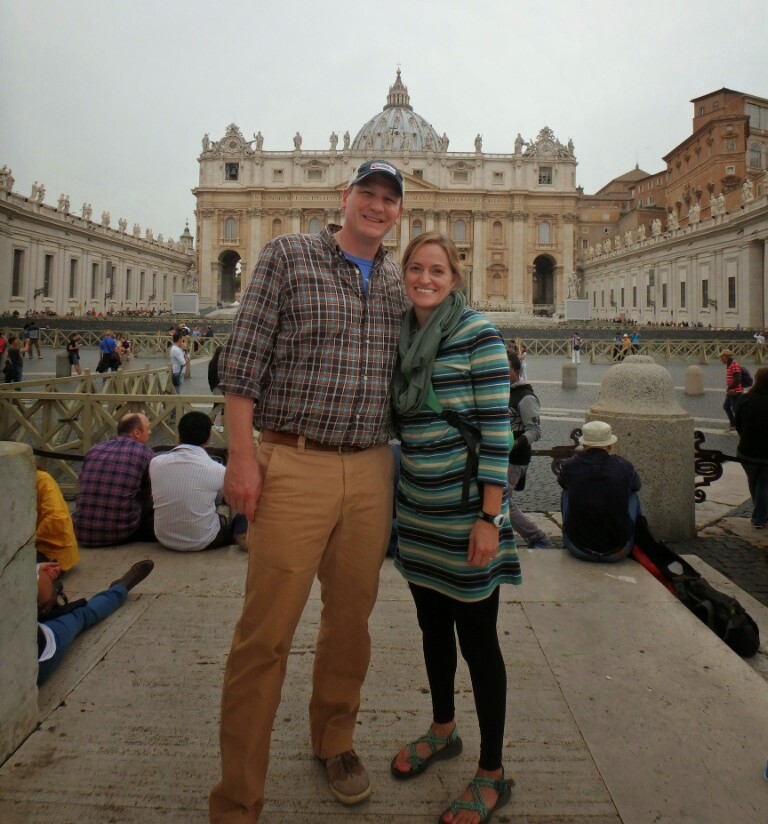
Last week, my wife and I were very blessed to have the opportunity to travel to London and Rome to celebrate my 40th birthday. As I reflect on the trip and all of the amazing things that we saw and experienced, it is difficult for me to sum up into a few words the most impactful parts of the trip. This morning, as I got back into my routine with a Monday morning run it finally started to become clearer in my mind. This trip taught me that I am a Very Important Insignificant Speck of life in this world.

There is perhaps no greater place to feel insignificant in this world than in Rome, Italy. As you stand in places like St. Peter’s Basilica Square (pictured above), The Sistine Chapel, The Pantheon, The Colosseum, The Roman Forum, or any of the thousands of amazing churches around the city it is humbling to remember that you are only ONE of hundreds of millions of people over thousands of years who have stood in those places. Think about that…The Pantheon was completed in 127 AD – less than one hundred years after the death of Christ – as a temple to the Roman gods of the stars and sun. There have been people worshipping in that building daily for almost 2,000 years. Talk about making a guy feel small!

Then we visited the Sistine Chapel. Built a mere 700 years ago, this building has one of the largest single expanse vaulted ceilings ever constructed. This slight detail added incredible complexity to the job of Michelangelo when he was commissioned in 1508 to paint the ceiling. Often forgotten in this masterpiece is the fact that Michelangelo had to first engineer a scaffolding that would get him up to the ceiling for the painting while at the same time allowing the chapel to continue to be used for services. As Jessi and I stood in the middle of this room with thousands of other people, and looked up at this view, my personal speck started to feel even smaller.

sistine

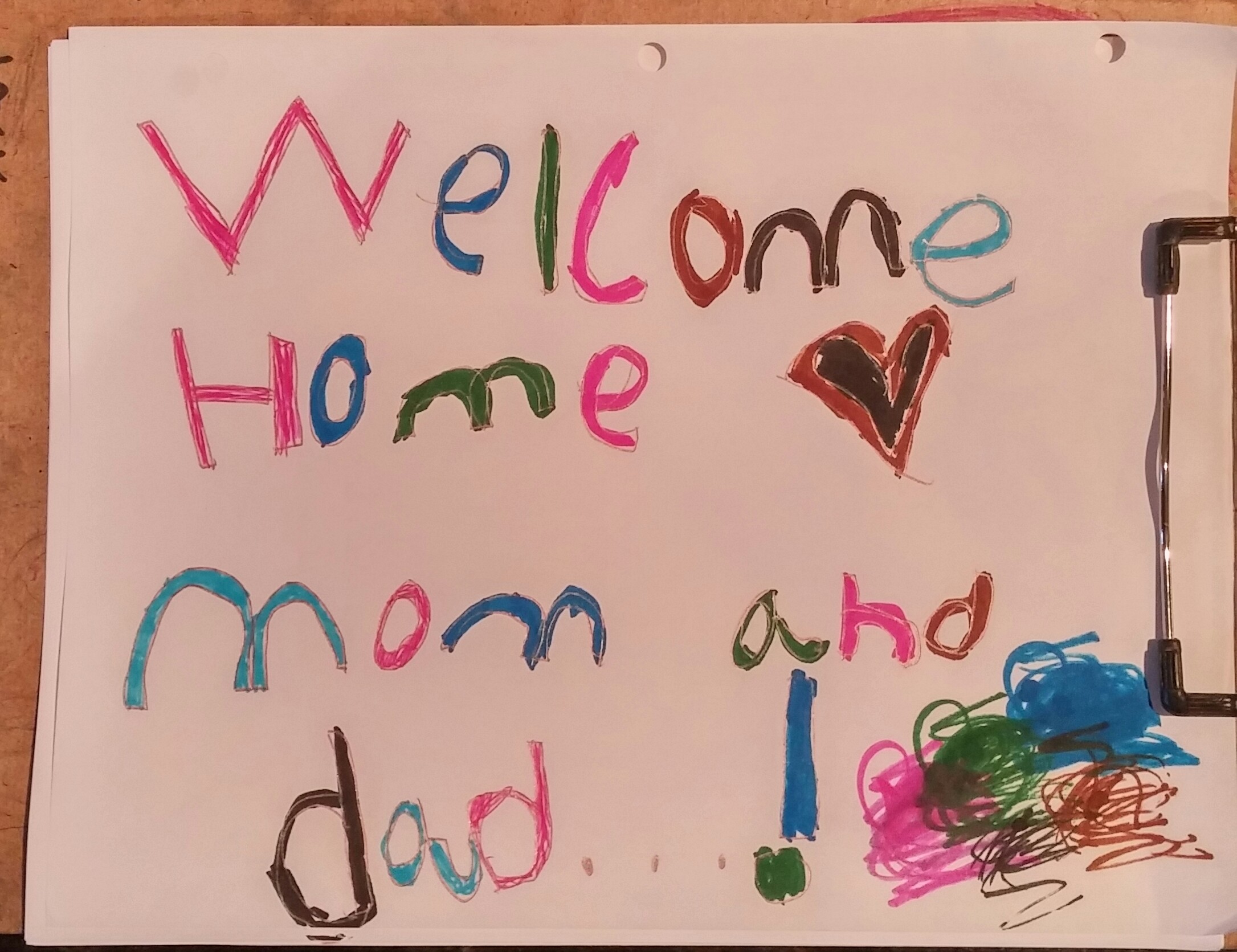
And then we came home. In over 9 years of being parents, we’ve never been away from our children for more than 3 consecutive days. Our week together was amazing, re-affirming of our relationship, and a shared experience we’ll never forget. It was great to spend so much concentrated time together. We talked a lot about our kids while we were away, like any parents would do. Then, when we walked in the door last night, we were met by this (and hugs and kisses):

welcomehome

So this morning, as I dropped the kids off at the bus stop and then ran one of my usual routes as a pretty insignificant speck after our trip to Europe, I suddenly started to feel pretty important. I’m important as a emotional and physical partner to my wife. I’m important to the growth, protection, support, and development of my two kids. It is important for me to be a good son, brother, and friend to those I care about the most. My health is important so that I can physically and emotionally care for my family and loved ones. My work is important to sustain me emotionally, my family financially, and my clients and colleagues professionally. And it is important to play and have fun and to share those moments with the most important people in my life.

My daughter’s welcome home picture reminded me of all of these reasons that I am important because despite all of the amazing things I saw over the past week, that simple sign meant the most. Her innocent and unconditional love came through in an act of caring and kindness that made us feel like the most important people in the world, and the excitement of her and her brother to hear all about our trip was the highlight of the trip by far.

The reality is that we are all pretty small and insignificant specks of human life in the grand scheme of global history. While we often act like we’re at the center of the universe, our daily lives and actions really don’t have a lot of impact on very many people. That doesn’t matter though, because to the people we do impact, we’re all very important. And it is to those people that we should give our time, attention, love, caring, energy, and concern. Every speck counts.

Reflection

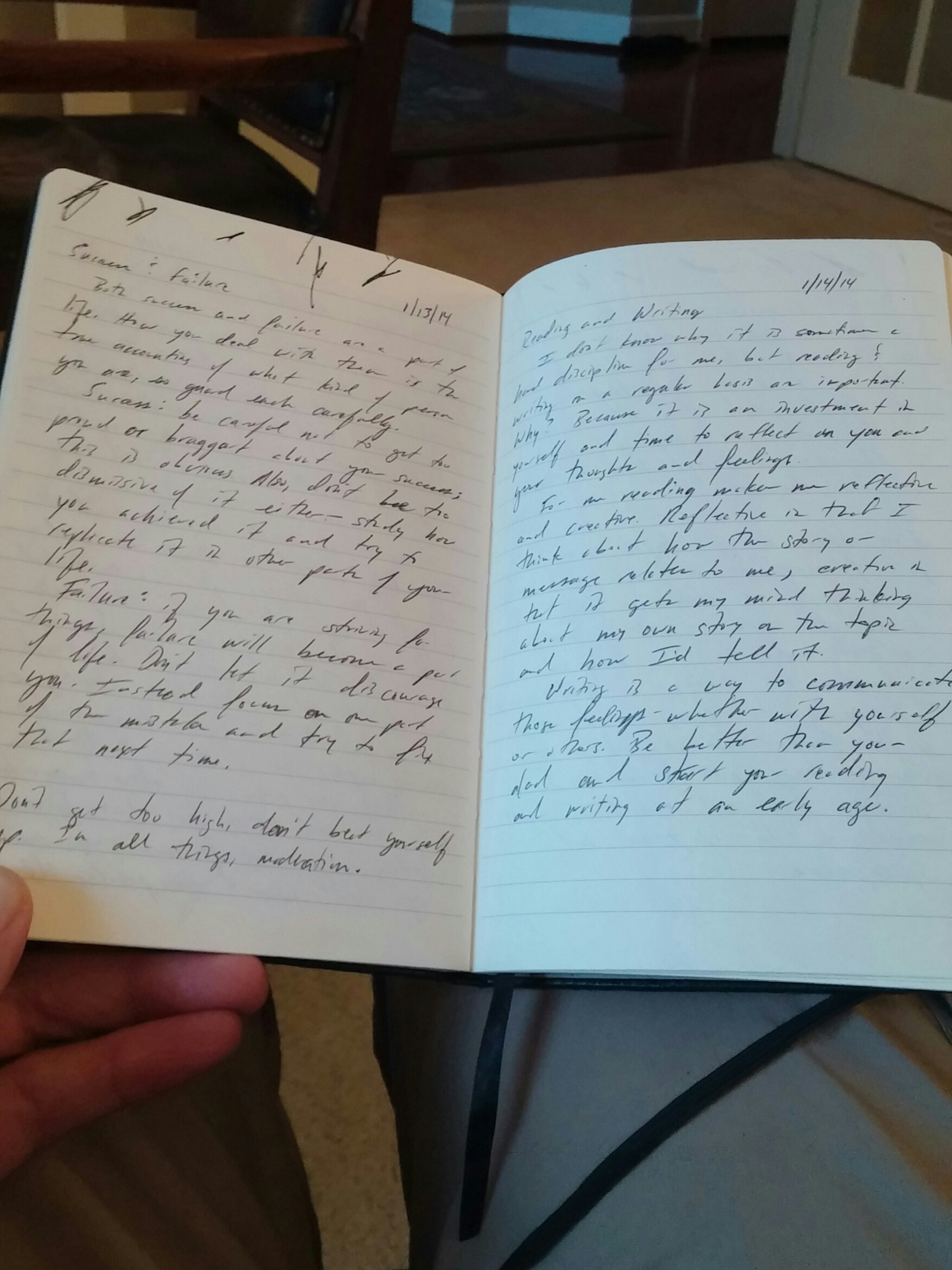
journal

Since November 17, 2009 I have been keeping a journal – very much off and on – that I have titled “Things Dad Learned” for Jack Searby. Today, I was writing in one of the last pages of the journal so I decided to flip back through it and read a few entries from the past 6 years. What ensued was a lesson on the power of reflection.

Looking back across these entries that are intended to be shared with my son when he heads off to college, I came to realize something in a very powerful way: it is very difficult for us, in the moment, to realize the insignificance or gravity of a situation.

Two examples drove this home for me. I came across an entry where I put on paper a very emotional passage about how trying my son, who was 4 at the time, was being to his mother and I. It was laden with a ‘woe is me’ tone about how hard he was making life by being overly emotional and getting in trouble at pre-school and on and on. As I look back on this, I almost have to laugh at how trite I was being. Jack, at age 4, was a new brother, in a full day pre-school because both of us were working full time, dealing with me being on the road a lot for work, and he was 4! I know that I thought it was a big deal at the time because this journal isn’t a “recap of my day” type of ledger. But with the passage of time and maturing of both Jack and I, it is obvious that the moment was insignificant in the grand scheme of things. It made me wonder what things in my life today I’m making more out of than I should. What “stresses” in my life today should I just let go of because they will seem so silly 5 years from now?

The second example was a series of entries that focused on a fear that I was moving too fast with a small business that I had started and self caution to not overextend myself financially with the venture. They were almost footnotes to their posts, but showed up 6 or 7 times over a 6 month period, as if I wrote them as reminders. Reflecting back, I now realize the gravity of those self-reminders and wish that I had recognized their wisdom. Instead, I plowed ahead on emotion pursuing the dream of owning a successful small business with little regard for the larger financial picture. Because of my blind faith, it all came crashing down – the business failed, we closed up shop, and I left a trail of financial wreckage that had to be dealt with (and is still being dealt with). THIS caused me to pause as well and consider what seemingly ‘little things’ in my life seem to be continually itching me that I need to pay closer attention to? I have been feeling my age lately and telling myself I’ve got to be more moderate in my diet and portions. I keep telling myself that I need to be more gentle and caring in my conversations with my kids. I regularly come back to the idea of dwelling on the joy in my life more and sharing these joys with my wife. These nagging thoughts may carry more gravity than I realize…and I probably won’t know for sure for years.

The reflection on my journal was healthy. It made me realize that I still have a long way to go to being the man I want to be and that I keep repeating some of the same mistakes. But it also made me realize that I have grown a lot in the past 6 years. The key will be what I do with these realizations over the next 6 years. Today I will take a step towards joy and gentleness in hopes that those small things carry great weight.

Courage to Step Away from the Work

I wish that I could say every morning I make time for prayer, quiet, and reflection, but I don’t. This morning, however, I did and a phrase popped into my head that had never been there before – Courage to step away from the work.

The context of this phrase came as I was thinking about, and praying for, my brother and several friends who are going through periods of intense work pressure or work-related stress in their lives. While each situation is very different, all seem to be wading through an overwhelming stream of work, an uncertainty about a work future, or a dissatisfaction with their current work that they can’t seem to escape. As I asked a blessing for strength on them, it dawned on me that they probably don’t have the strength to endure these situations.

Work can be both intoxicating and addicting, leading us to feel like if we just put in 30 more minutes tonight or return 5 more emails or complete one more report we’ll feel really good. I know this to be true because I’ve been there. I’ve sent emails to colleagues at 8 o’clock on a Friday night when I should be enjoying a movie with my family. I’ve texted my wife that I won’t make dinner because I have to finish a project. I’ve returned to my desk before bed for a few hours of “uninterrupted work” only to find that I can’t sleep because I got my mind racing with the things I have left undone. And I still do these things on occasion.

So today, my prayer for myself, my brother, these particular friends I have in mind, and anyone else that thinks they have too much work to do to relax is this: I pray that we will have the courage to step away from the work because the work is not worthy of our worship and it is robbing us of our peace and joy.

I fully appreciate that hard work is necessary and I even believe that work can be an act of worship and praise. However, our culture has placed an undue value on “putting in time” at work. My technology makes me completely accessible to my colleagues in Portland, OR, Australia and Europe any time I allow it. If you look at the time zone map, you’ll see that as a worker in the American East, working for a company based in the American West, with colleagues and projects going on in both Australia and Europe, I could, theoretically, work 24 hours a day and be engaged during someone’s work day that needs me. I choose not to do that.

Instead, I choose to focus on engaging with my far flung colleagues only in thoughtful and meaningful ways. This sometimes demands that I hop on a call with Australia at 11 o’clock at night or support a conference call with European clients at 6 in the morning. Last night it meant an important phone call with a team member in Portland, OR at 8:30p my time as he drove home from work. The key is that I focus on MEANINGFUL interactions. Rather than respond to every email from every time zone every time, I select ones where I can add value. Instead of making myself available to anyone who wants me at any time, I define my availability based on when I can be attentive and engaged. And often, I spend time during my typical workday here in the Eastern Time Zone doing things that are personal tasks, family obligations, self-improvement, or just fun.

It takes courage to step away from work, but it is wholly necessary. The word courage is defined by Oxford as “the ability to do something that frightens one.” Walking away from the work definitely frightens me. It can be terrifying to think about what Monday might be like if I don’t check off everything on my Friday list, or what my boss might think if I don’t respond to his email within 5 minutes on a Sunday night (which is Monday morning in Australia), or how a client might react if I don’t pick up their phone call from California at 6pm Eastern time as we are sitting down for family dinner. Still, we must act in the face of that fear and walk away, hit ignore on the phone, or shut down the email.

You see, while we all inherently know that we need space in our lives for fun, family, friends, hobbies, or relaxing, we somehow give these things second class status to work. So we press on, trying to squeeze work into every nook and cranny of our lives. All the while, we are missing out on the joy that comes with allowing space and time into our days.

So if you’re feeling overwhelmed by your volume of work today, stressed out about your work situation, or just looking at a to do list that seems insurmountable, have the courage to step away from the work. Unless you are a surgeon, it is unlikely that anyone will die from you not getting back to them or not attending to their need (want). Don’t fill your time away with anything that even feels like work. Instead read a book, go for a walk, sit at a bar, talk to your spouse, enjoy your backyard, or just sit quietly. You’ll find that not only will the work still be there, but you will be refreshed and re-energized when you return to it after your courageous hiatus.

The Optimism of College

GATech

Last week I had the opportunity to visit Georgia Tech and Clemson University for work. While it isn’t uncommon for me to be on college campuses in my job, these trips were a bit unique in that I had some down time between meetings at each place which allowed me the chance to walk around both campuses a bit on beautiful late summer days in the South.

While each school has some beautiful spots (like the fountain above at Georgia Tech), it wasn’t the natural beauty that struck me. What really stood out to me was how energizing college campuses can be. There was a buzz in the air as I walked around amongst the 18-22 year olds in their environment. Yes, I did realize how old I’ve become as I noted the differences in fashion, language, and fitness level. Sure I had a few moments of angst as students just walked right out in front of my car in the middle of the street because that is where they wanted to cross. And I certainly had some trepidation for our country when I saw the frat boys slamming beers on the front porch of their house at 2 in the afternoon. But those things just come with the territory.

What I had forgotten in my nearly 20 years out of college is how much hope, optimism, excitement, blissful ignorance, and energy can be found around university students. The highlight of my trips last week was the opportunity to speak to a Sports Marketing Class at Clemson University. Far from dis-engaged, the students seemed interested, asked good questions, had insightful comments, and a few even hung around to talk after class. I was on cloud 9 the entire drive home. There is something about young adults, aspiring to be professionals in your field, listening and soaking in your instruction that makes one feel like they are important.

Over the past few days, I’ve been mulling over why I had that reaction to these experiences back on campus. I think certainly there is some nostalgia about my own time at Milligan College. My time tucked away in the mountains of East Tennessee, making the best friends of my life, and learning how to learn were some of the most formative and impactful years I’ve experienced. I remembered back to the carefree feeling of early fall days when classes were over and basketball practice hadn’t yet begun or the springtime when a Friday afternoon meant taking off early (and maybe even skipping a class) for a camping trip.

I’m sure part of my euphoria was also connected to the 10 years that I spent on college campuses as a basketball coach and athletic administrator. I met my wife on a college campus and our lives, both personal and professional, revolved around those schools and their athletic departments for many years before our own kids came along. We developed intimate relationships with the coaches and student-athletes we worked with, and developed passions for the schools where we worked.

Still, I think it is the optimism I sensed that excited me the most. Unlike our adult lives that often grind on endlessly from week to week and month to month with no beginning and no end, college has built in points of reset. The start of school in the fall is a chance for everyone to have a clean slate with no grades in place, no interpersonal fractures with professors or friends, and a fresh start. Every year there is a new crop of freshmen experiencing things for the first time, which adds to the excitement. Most schools have a fall break that is the end of the first big push of the year, and when you come back you start focusing on getting the first semester wrapped up. Then it is an extended Christmas break time for family, football bowl games, and a time to decompress. The Spring semester gives you the promise of new and different classes, established friendships, and the pursuit of an internship or other summer activities. By the time Spring Break rolls around, you’ve pushed yourself to have a good start and you come back from a week of fun in the sun to finish the school year with 6-8 weeks of either hanging on in your classes or throwing in the towel. The end of the semester may have angst and anxiety, but after a week its over and there isn’t anything you can do about. All that is left is to move on to whatever personal or professional opportunities you’ve lined up for yourself in the summer, where if you’re lucky you get a 3 month ‘test drive’ of something you think you want to do for the rest of your life. Then you walk away from your summer fun/work, wash your hands of it, and start the cycle over.

How could you not be optimistic if every 3 months you got a ‘reset?’ It is no wonder that there is energy permeating from college campuses. Rather than starting each week looking at last week’s sales report and worrying about how this week will impact next month, every week holds the promise of its own new challenges with little regard for last week and certainly no concern for things months from now. Instead of facing the same 8 am start and 5 pm end to the day Monday through Friday, college schedules are random and scattered with some classes meeting 3 times a week, others 2, a few one day a week, and an intensive seminar now and then. Some days your first class is at 8, sometimes it might be 10. When Friday rolls around all you think about is yourself, not chores around the house or kids’ activities. If you go through a semester and struggle with a class, its over in less than 6 months and you redirect things to an area where you’ll find more success; think about the opportunity to do that on your work projects!

For me, being on these college campuses was a great mental reset. It not only made me grateful for my own college experience, but it got me thinking about trying to borrow some of their optimism for my own life again. If you haven’t been on a college campus in awhile, I’d strongly encourage you to go – go back to your alma mater for Homecoming, volunteer to be a guest lecturer at a local school, or go to a random art or sporting event at a nearby school. Park somewhere on the edge and give yourself some time to walk the campus, hit a coffee shop, or stop in at the student union. Then sit back and ask yourself why you shouldn’t have the same optimism as the students you see around you? My grind is only a grind when I let it be that way and so is yours.